In St. Petersburg‑St. Petersburg hosts the IX International Fisheries Forum and The exhibition of the fishing industry, Seafood and technologies (Global Fisheries Forum & Seafood Expo Russia 2026). Svetlana Panfilova, Deputy Governor and Minister of Arctic Development and Economy of the Murmansk Region, is taking part in the business program of the forum.
Together with representatives of federal agencies, industry associations and foreign companies, Svetlana Panfilova participated in the Round Table "BRICS Fishing Routes. The potential of Russian exports to the countries of the association". The experts discussed the current and target indicators for the export of fish products, barriers in foreign markets, the development of electronic certification and the prospects for alternative certification systems for the BRICS countries.
In her report, Svetlana Panfilova emphasized the strategic importance of the fishing industry for the region's economy.
"For our region, the fishing industry is not just an economy, it is a historical foundation," the speaker noted. — The Murmansk Region retains the status of the largest fishing center of the Russian Federation: it accounts for every eleventh ton of fish produced in the country. The region is a leader in the production of Kamchatka crab in the Barents Sea and is one of the main regions for the production of northern shrimp," said Svetlana Panfilova.
The dynamics of export shipments from the Kola Arctic demonstrates a steady increase in shipments to the BRICS countries. If in 2022 the volume of exports was less than 10%, then by the end of 2025 it reached 26%, and in the first 8 months of 2026 it was already about 40% of the total volume of exports of fish products of the Murmansk region. The active development of the Asian crab export industry continues. In 2025, the share of this type of product exported to the BRICS countries was 35%; in 2026, the volume of shipments of crustaceans remains at a comparable level.
China is a key partner: by the end of 2025, it accounted for 25% of the total volume of exports of fish products in the region (the main positions are frozen fish and crustaceans).
However, access to foreign markets, including the BRICS countries, comes with a number of barriers. Svetlana Panfilova named legislative restrictions among the key problems, including the ban on the export of products produced at coastal plants from coastal catches. The work of industry companies is also complicated by the high cost of marine diesel fuel in remote fishing areas, which significantly increases the cost of production. Another obstacle is the requirements for permits for exports to China. Currently, the duration of a full range of laboratory tests ranges from two weeks to a month, which complicates logistics, increases costs and risks of damage to goods.
Systematic work is underway in the region to create favorable conditions for polar enterprises to enter the BRICS markets. Thus, the Export Support Center of the Murmansk Region provides targeted assistance to SMEs, from finding and verifying counterparties to co—financing certification and organizing business missions. Many services are provided within the framework of the national project "International Cooperation and Export".
The Territorial Fisheries Council serves as a platform for direct dialogue between government and business, where issues related to administrative barriers, fleet basing and logistics are promptly resolved. With the active participation of council members and Chairman of the Council, Governor of the Murmansk Region Andrey Chibis, a number of regional initiatives aimed at developing the fisheries sector have already been approved at the federal level.
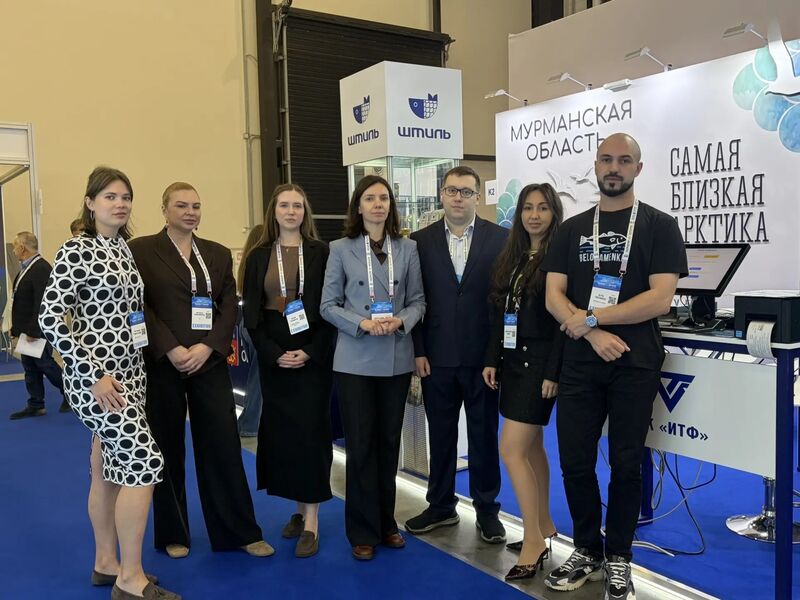
As part of the forum, Svetlana Panfilova also visited the collective stand of the Murmansk region at the exhibition of the fishing industry, seafood and technologies. The stand, prepared by the Regional Export Support Center, presented the products of seven small and medium-sized enterprises operating in the fishing industry.
/Ministry of Arctic Development and Eco-Economy of the Murmansk Region/